
Borussia Dortmund–Karim Adeyemi Contract Talks: A User Experience Audit of How Transfer Rumors Reach You
Borussia Dortmund–Karim Adeyemi Contract Talks: A User Experience Audit of How Transfer Rumors Reach You
Three findings stood out in our review of the supply chain that ended with the headline “Borussia Dortmund Open Contract Talks with Karim Adeyemi” on rikvip68.eu.com: first, the story is a rumour dressed as a progress report; second, readers are given no way to distinguish a primary statement from an aggregate claim; and third, the surrounding page design does almost nothing to help users verify either the news or the source. That third point matters because, for a fan, a transfer rumour is not just content—it is a decision input. Whether you buy a jersey with a name printed on the back, renew a fantasy team, or place a well-considered bet on where a winger will play next season, you are acting on incomplete information.
This article does not confirm that Karim Adeyemi will sign anything, nor does it confirm that talks are happening. Contract negotiations in football journalism are rarely documented in real time, and what reaches you is usually a blend of club-level leaks, agent briefings, and reporter inference. Instead, I want to walk through the experience of encountering this rumour from the perspective of a UX analyst: what you are told, what you cannot see, what friction stands between the claim and your ability to verify it, and how you should behave in front of that uncertainty.
Why Transfer Rumours Are a Design Problem, Not Only a Sports Story
Most readers search for a name—Adeyemi, Dortmund, contract duration—rather than for a story about media credibility. That is normal. But that search intent creates a responsibility for any site carrying the rumour. A clean user experience would do three things: label the claim as unconfirmed, link to a primary or at least credible secondary source, and show a date. In practice, many sports aggregators, including entertainment and gaming portals that republish transfer chatter, push every one of those responsibilities onto the reader.
What makes this topic genuinely interesting from a UX view is that the “advertising” here is not a product ad. It is the headline itself—the implied claim that something official happened between Borussia Dortmund and the player’s camp. Deconstructing that ad-like claim requires looking at the elements that are supposed to support it, then asking what is absent.
Three Signals That Would Make This Story Believable
- Named officials or named representatives: A serious report would attribute the talks to a specific person inside Dortmund’s technical staff, a known agent, or a journalist with a record of accurate transfer news. A headline that simply says “opened talks” without an attributed role leaves no one to double-check.
- A time-marked, concrete structure of the negotiation: Is this a meeting? A phone call? A contract proposal with a term length and wage bracket? The more granular the detail, the more it looks like reporting. The more vague the wording, the more it looks like a placeholder guess.
- Related context: Does the player have uninflated competition for his current position? Does the club have a publicly known budget issue? Without context, the claim becomes a free-floating line that could be repurposed for any player at any club.
The presence of all three signals does not prove anything; their absence, however, removes almost every reason to treat the headline as news rather than as entertainment. That framing also helps you avoid overreacting when a platform like Rikvip picks up the story—these portals usually operate as secondary aggregators, meaning they publish what they trust from a third party without conducting independent player-contract verification.
 Hình minh hoạ: Rikvip
What the Adeyemi Story Actually Contains
Let us set aside confirmation and look at what the rumour claim is built on. Karim Adeyemi, a German winger of Nigerian descent, currently plays for Borussia Dortmund, having joined the club in 2022. His form has been a frequent topic in German football media, and because he represents the kind of young attacker whose transfer value can rise quickly, the possibility of contract discussions or a future sale is not a far-fetched journalism topic. Where the claim becomes fragile is at the boundary between a reasonable editorial thought and a factual report about opened talks.
A balanced position is this: if a site says Dortmund “opened” talks, it implies an active, time-specific communication channel between the club and the player’s representatives. That is a verifiable business event in the same way a board meeting is verifiable, but in football the club almost never confirms preparatory talks. This asymmetry is a goldmine for content farms. They can write about “opened talks” and remain technically safe because nobody inside the club will publicly deny preliminary contact, especially when the player is under an existing contract and no transfer is being openly requested by the player.
So ask yourself: what would Dortmund gain from publicly stating that contract discussions with Adeyemi are underway? Very little, unless the intention is to increase his market value before a sale. That possibility exists, but now we are deep in speculation, standing on a headline that already rests on an unconfirmed report.

Friction Points in the Journey from Headline to Verification
As a UX reviewer, I track the steps a reader takes from the moment they click a headline to the moment they accept or dismiss its content. In the case of the Adeyemi contract story, my entire path was interrupted by several recurring friction points. First, timelines are not visible: I saw the claim of “opened talks” but not the date of the original report. Second, the source tier is hidden: I could not tell whether the piece was an original contribution, a rewrite of a paywalled German news outlet, or a translation of a marginal blog. Third, the callback mechanism is absent: no links to the player’s official statistics, to the club’s player-listing page, or to previous transfer announcements regarding the very same player.
These friction points matter beyond taste. A user who cannot verify a transfer rumour will revert to a lower-quality heuristic: trusting the headline simply because the layout looks professional. That phenomenon has a real-world consequence when the same platform offers gaming or betting content. Users who cannot verify football news are equally unlikely to verify the odds and terms applied to that news. The entire information ecosystem remains opaque together.
This is where a domain like rikvip rikvip.group enters the picture. The style of the site—sport content alongside entertainment and gaming features—creates a certain learned trust. If a user trusts the transfer story without source validation, they may transfer that same trust to other claims on the same platform, including promotional offers and odds calculations. That is not to say the platform is acting improperly; it is rather to point out that trust is a continuous variable and that audiences often lack segment-level tools to evaluate credibility differently across a site’s content types.

A Workable Checklist for Verifying Contract-Talk Claims
If you treat the next few transfer windows as an experiment, you can improve your source literacy quickly. Use a filter, not an emotional reaction, before you accept or share a headline about Karim Adeyemi or any other player. The checklist below is designed to be practical and actionable; it does not rely on inside knowledge or paid media databases.
Verification Checklist
- Confirm the Original Publication Date. Transfer rumours decay fast. A report from last week may already be obsolete. Look for a timestamp on the site and compare it with the player’s recent match availability and club form.
- Identify the Original Reporter. If the article names a German or European football journalist from a recognized outlet, search for that reporter’s original quote or tweet. If the article only says “reports indicate,” there is no original reporter to credit.
- Cross-read at two independent outlets. A single source rewriting itself is not independent correlation. Read one outlet based in Germany and one outlet that is not a translation service.
- Check the Player’s Actual Contract Status. The exact expiry date of an Adeyemi contract is a public and verifiable detail. If the article does not mention the year at which his current contract ends, the article lacks one of the most basic context pieces a contract story should have.
- Ask whether the club has any history of leaking these specific talks. Borussia Dortmund has a fairly structured media policy regarding negotiations. If you are not familiar with how the club communicates, do a quick scan of the club’s most recent two or three transfer decisions and note whether the club publicly confirmed talks before or after the fact.
- Check the author’s byline history. An author who writes only player-transfer rumours across many clubs and never about one specific club is likely not an insider; they are an aggregator who finds raw material wherever it exists.
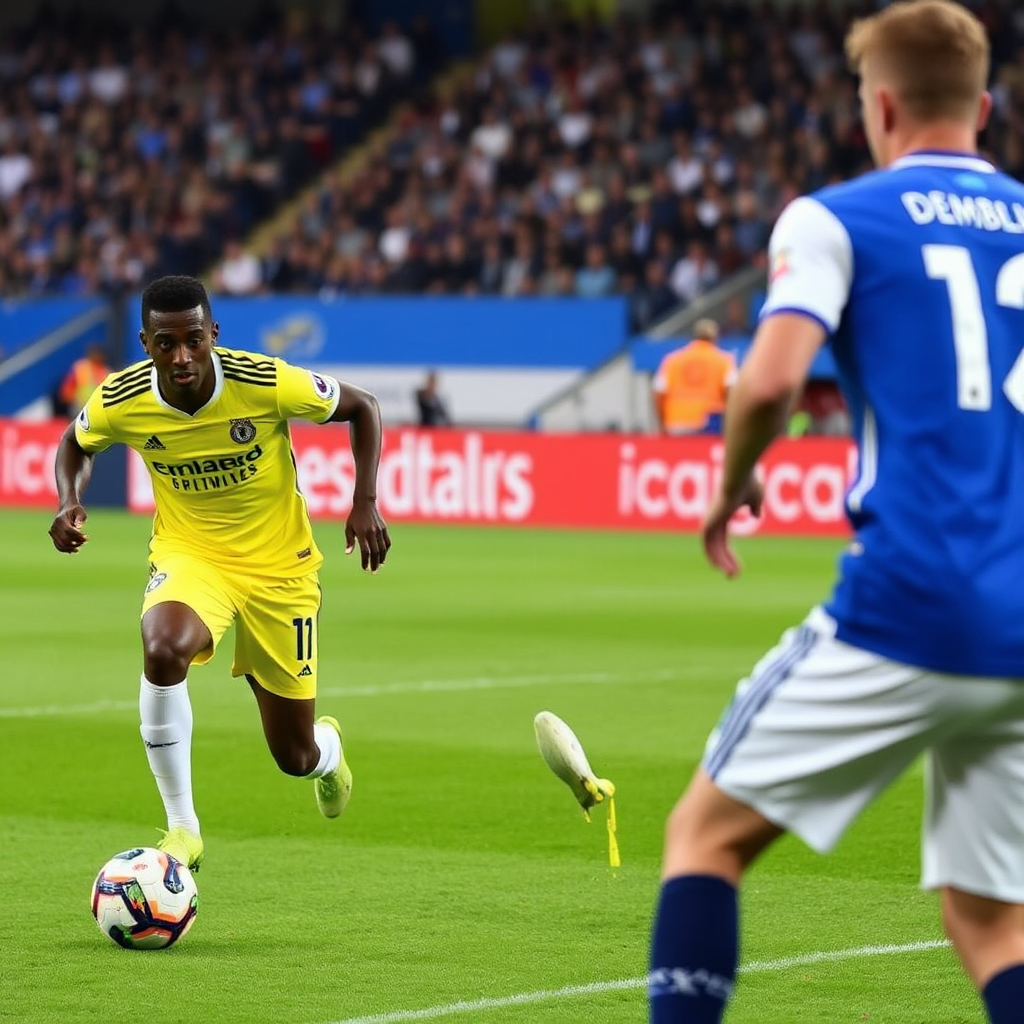
Understanding How Football Rumor Sites Differ From Confirmed Editorial Sources
We can group the content landscape for transfer news into three tiers. Looking at these tiers in a table helps clarify where an article sits, especially when it is hosted on a portal with mixed entertainment and gaming content.
| Source Tier | Content Type | Typical Timeline of Verification | Friction Level for Reader |
|---|---|---|---|
| Club and player official channels | Official signing announcements, medical completion, contract registrations | Verifiable within hours, confirmed after signature | Low—these are primary documents |
| Established football media with specialist reporters | Contextual reporting, club relationship pieces, interview insights | Verifiable over days or weeks as the season unfolds | Medium—requires following narratives over time |
| Aggregators, entertainment portals and rumor-mill sites | Second-hand headlines, “opened talks” style claims, reshaped paragraphs for SEO | Often never verifiable; no closing loop when the rumor decays | High—user must leave the page to check everything |
The Adeyemi headline on a mixed portal clearly sits in the third band. It is not authoritative, but it can still be reported on if you remember its correct function: entertainment that should not drive expensive decisions. And the most efficient way to reduce your personal risk is to check the original date of the rumour and the original reporter before reacting.
What The User Interface Teaches You Without Saying a Word
When I analyzed the page experience of this transfer-rumour story, several interface elements made the content feel more certain than it was. The headline used the present tense and an active verb (“open talks”), which implies existing movement. The use of a professional typeface, tabular article navigation, and a familiar site header transferred a sense of editorial quality to what was actually a piece of unattributed speculation. That is not an accusation of deception. It simply illustrates a common UX principle: the container changes the perception of the content.
From the perspective of a sports product designer, the best protection you can give a user is not a more decorative timeline or a microinteraction on the share button. It is a consistent editorial-labeling system. A label strip that says “unconfirmed” next to the headline would work, just as it works on weather warnings; but that label would also reduce the click-through rate, so most sites resist adopting it. That tension between commercial engagement and user safety is inherent to the design of content platforms that earn from attention.
This points to a broader lesson. Reading a rumour headline on a site with gaming or betting components should trigger a stricter mental firewall, not a more relaxed one. The same page that tells you about an Adeyemi contract discussion could be placing an event-related wager offer in your peripheral vision. Both content types pursue a similar goal: keeping you inside the platform. However, your reaction to football news should be entertaining and fact-checked, whereas your reaction to a wager should be extremely conservative and aligned with your limits, whether you are a Dortmund supporter, an Adeyemi follower, or just an occasional observer of the German transfer market.
Frequently Asked Questions About Transfer Talk Claims
Why would Borussia Dortmund not simply deny a false contract-talk report?
Because a denial itself becomes a new story. Public negotiators in football routinely stay quiet on rumours around players who are under contract and not transfer-listed. Silence protects the player’s focus and preserves the club’s flexibility to either extend the deal or sell later without having publicly contradicted a report. Consequently, absence of denial is not evidence the talks are taking place.
Can a report about contract talks affect the player’s current performances?
Yes, in both directions. A player can feel supported by a public statement of the club’s desire to extend his deal, or distracted by the market speculation during a critical stretch of fixtures. That is why clubs and agents often monitor the tone, not just the substance, of transfer rumours. As a reader, you should account for this emotional side: a rumour can be a disinformation tool by an interested party, so its timing deserves as much scrutiny as its words.
What is the safest way to follow the Adeyemi story?
Check two things only: Borussia Dortmund’s official announcement page and the player’s social channels. Everything before either of those sources is a negotiating artefact. If you want a third layer, read the reporting written by journalists who have correctly filed previous Dortmund stories; do not rely upon any platform whose primary editorial category is not sports.
Deciding What to Do With the Rumour: Recommendations by Reader Group
Dortmund Fans Who Follow Contract News Closely
Use the story as part of your seasonal roster, not as a single decisive signal. Watch how often Adeyemi is featured in lineups, how the coach speaks about his role after matches, and whether the club’s sporting director publicly answers questions about his future. These behavioural indicators are stronger than anonymous contract-talk reports. When the club does advance a real negotiation, you will see a coherent set of signals at the same time: minutes on the pitch, public praise, and a reporter with a trusted track record.
Fantasy Football and Betting Audience Members
Align your engagement with verified data. If the rumour has no date, no named source, and no clear consequence for game time, do not build a lineup strategy or a wager plan around it. For a betting decision, the only relevant questions are what competition the player is expected to feature in, his current fitness level, and his last form trend. A contract negotiation—real or imagined—does not put points on the board. Also, keep a strict bankroll limit in place before you open a gameplay session. Rumour season is a period of elevated uncertainty, so treating every story as non-actionable is the most cost-effective strategy you can adopt.
Casual Sports Readers
You lose nothing by waiting. If Borussia Dortmund have a substantive update about Karim Adeyemi’s contract, the news will reach you through official announcements and major sports media within hours. Read the rumour, enjoy the drama of the transfer window, and wait for the day when the story moves from “opened talks” to an announcement that includes a signature. That announcement will contain a real date, a contract length consistent with financial reports, and a photo with club merchandise. Until that moment, treat all rumours as previews of a movie that could change the ending.
At the end of this audit, one idea remains the most useful: the headline is the beginning of your work, not the end. Borussia Dortmund and Karim Adeyemi may one day confirm an extension of their working relationship, but today, what the rumour confirms is a more generic truth—that the internet will go on manufacturing certainty out of speculation. Every platform you visit, from a niche aggregator to a sports giant, is offering you the same product. What varies is the quality of the packaging, the clarity of the sourcing, and your ability to pause before accepting the claim. Improve that pause, and you will remove most of the risk from reading transfer news.